Every Saturday morning, millions of Australians voluntarily drive to a warehouse the size of an aircraft hangar to smell timber and buy things they didn't know they needed. They have a chat, eat a sausage, and look forward to doing it again next Saturday.
We’re absolutely fascinated by this unsuspecting warehouse retailer — selling power tools, garden hoses and treated timber — and the many ways they’ve become one of the most beloved and trusted brands in Australia. Not just tolerated, or merely respected, but genuinely loved — by tradies, weekend warriors, first-time renters, and retirees who come in for pot plants and leave an hour later having spoken to three staff members and consumed a sausage sanga and Coke Zero for $5.50. In a media environment that rewards novelty, Bunnings attracts loyalty through consistency. In a category not known for emotional resonance, it has built a bonafide cult following.
The numbers bear this out. According to Roy Morgan's Risk Monitor, Bunnings has topped the rankings as Australia's most trusted brand for nine consecutive quarters — a streak stretching back to late 2023, placing it consistently ahead of Aldi, Kmart, and the Commonwealth Bank. Not “most trusted hardware store,” most trusted brand, full stop.
For FMCG and CPG brand teams, this is worth paying close attention to. Bunnings has done something most packaged goods companies spend years and millions attempting: it has turned a transactional category into a cultural icon.
A Brief History of Bunnings
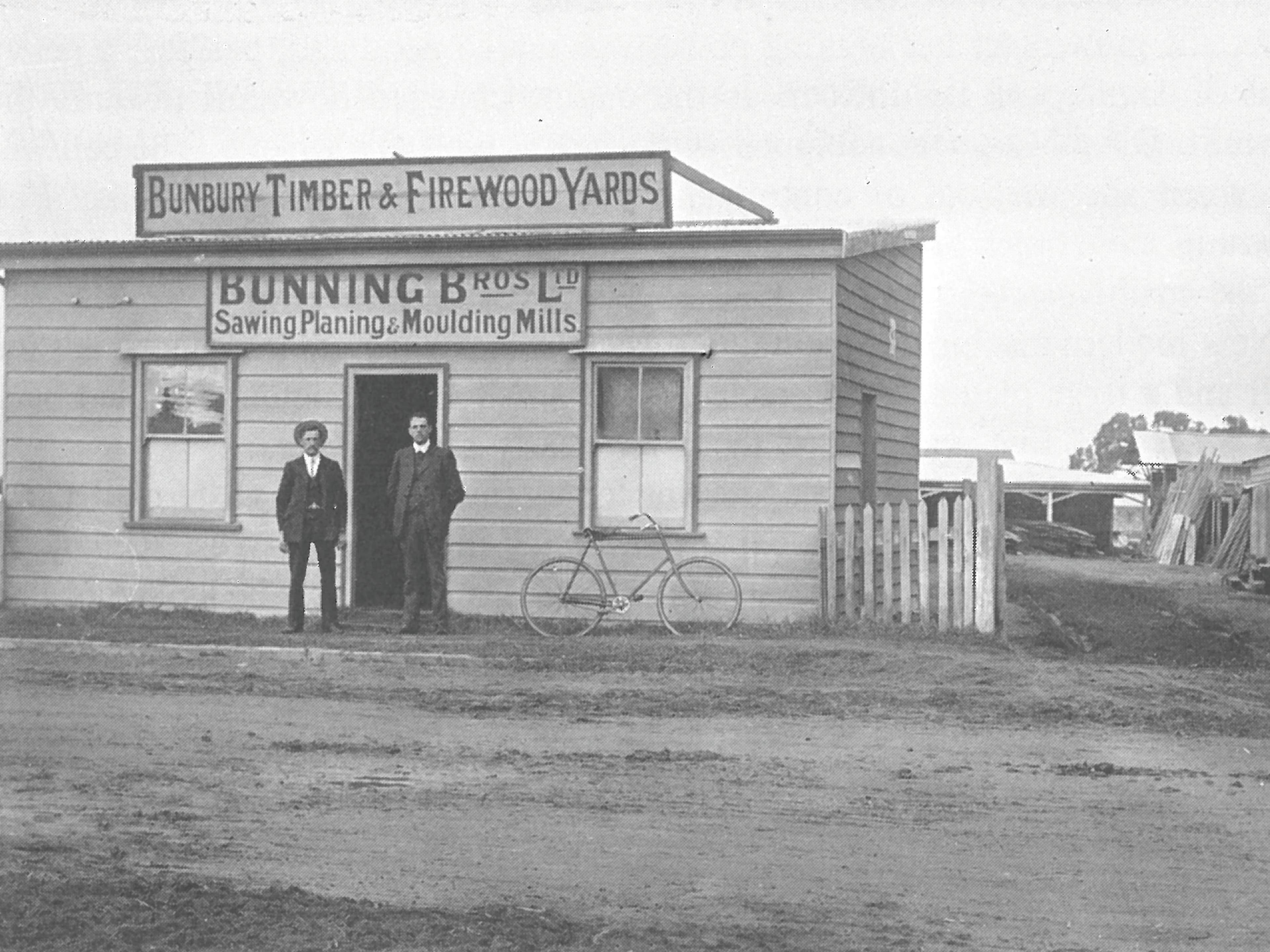
Bunnings was established in Perth in 1886 as a timber and building supplies merchant. Acquired by Wesfarmers in 1994, it underwent a steady, deliberate expansion into the format we recognise today: large-format warehouse stores, a broad and deep product range, and a single-minded commitment to low prices and high availability.
The brand was built from the inside out — from the way staff interact with customers, the way prices are displayed, the way the store is laid out. What Bunnings understood, perhaps before many retailers did, is that trust is not built through communication. It is built through consistent behaviour, repeated across thousands of touchpoints over decades. The advertising is merely a reminder of something people already believe.
The Price Beat Guarantee as a Brand Contract
Bunnings’ price beat guarantee — that it will beat any competitor’s price by 10% — is often discussed as a promotional mechanic. But it functions as something more fundamental: a brand contract.
The guarantee works not because customers constantly invoke it, but because they know they could. That latent assurance removes a layer of cognitive friction from every purchase. Shoppers do not comparison-browse before walking in, because they already trust they will not be worse off. The result is a purchase environment built on confidence rather than vigilance.
For CPG brands accustomed to promotional cycles and price architecture battles at the shelf, this is instructive. Price trust is not about being cheapest. It is about being predictable. Bunnings has never needed to be the lowest price on every SKU — it has simply needed customers to believe it will not exploit them. That belief, once established, becomes almost impossible for a competitor to displace.
The Sausage Sizzle: The Most Effective Brand Asset in Australian Retail
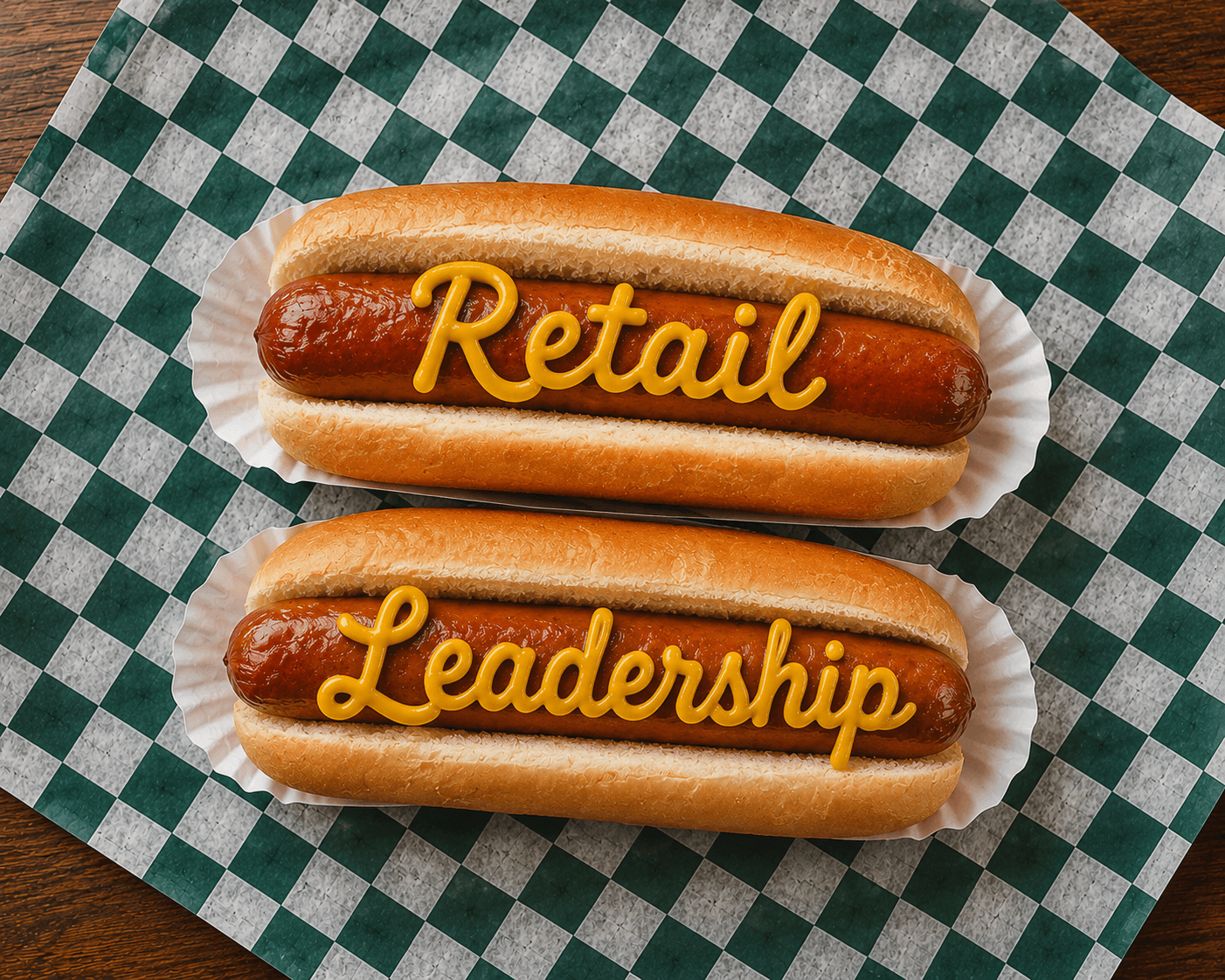
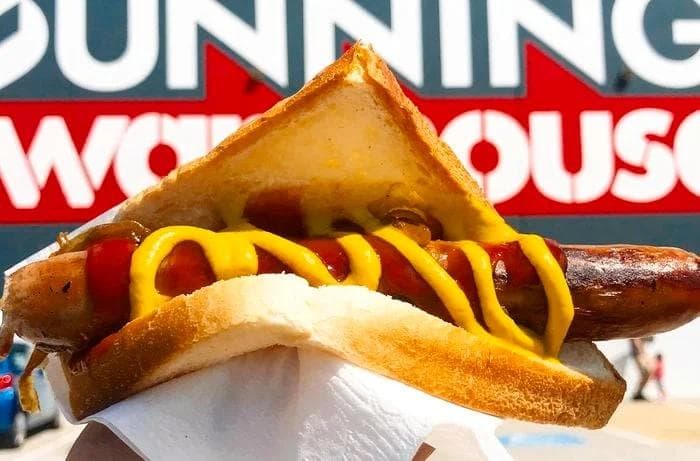
Where else will $5.50 get you a snag and a cold drink? Cooked by volunteers on a folding table outside the entrance, it has no loyalty mechanic, no QR code, no influencer partnership. And yet the Bunnings sausage sizzle may be one of the most notable brand assets in Australian retail.
Part of what makes it work is the sensory hit. You've just spent time under fluorescent lights, navigating concrete floors and towering shelving. Then you step outside, and there's the smell of onions, the sound of the sizzle, the low-fi energy of a fold-out table doing brisk trade. The contrast alone makes it memorable. The warehouse is functional, but this is so human.
Then there's the ritual of it. Some grab a snag on the way in, fuel for the shop ahead. Others save it for the way out, a small reward at the end of a mission. Onions or no onions, these micro-decisions make an experience feel personal, even when it's the same table, on repeat.
This whole experience is also wrapped up in nostalgia. The sausage sizzle predates Bunnings: school fetes, footy clubs, local fundraisers. Bunnings didn't invent the format, they just made it a permanent fixture of the weekend, and in doing so, borrowed decades of warm association.
The giving-back dimension matters as well. The sizzle is almost always run by a local group: a sports club, charity, or school. Buying one doesn't feel like feeding a corporation, it feels like funding a community.
And let’s not forget the convenience factor. These people are mid-weekend, often mid-project. A hot snag, no waiting, no decision fatigue. The sausage sanga really meets the moment.
There is a lesson here that FMCG companies consistently miss. Brand love is not built by telling people how your product makes them feel, it is built by creating moments where they can naturally experience what your brand is all about.
Staff Knowledge as Competitive Advantage
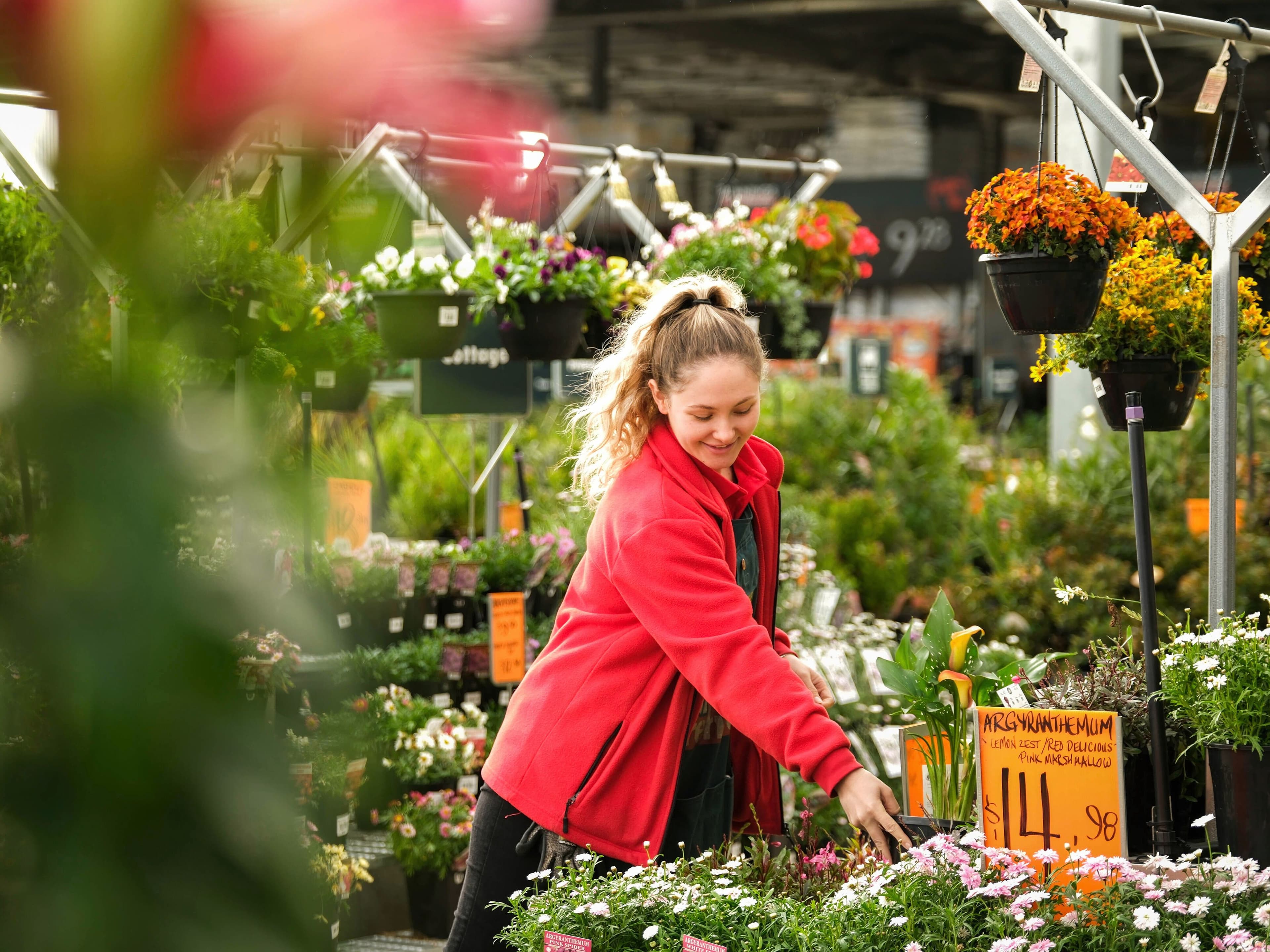
Walk into a Bunnings with a problem — a leak under the sink, a fence post that will not set, a lawn that has turned yellow despite your best efforts — and you are likely to walk out with a solution. Not a product, a solution.
This is the result of a deliberate investment in staff knowledge that most retail businesses treat as a cost rather than a capability. Bunnings employs a high proportion of people with trade backgrounds or genuine category expertise. They are not trained to sell; they are trained to advise. The distinction matters more than it sounds.
For shoppers who are anxious about a category they do not understand (and hardware is full of them) expert, non-pressured advice is not just useful, it is deeply reassuring. It turns a potentially overwhelming environment into one that feels navigable and supportive. It builds the kind of trust that no advertising campaign can manufacture, because it is earned through the interaction itself.
The Store That Believes You Can
There is a particular feeling that Bunnings reliably produces, and it is not one you would expect from a warehouse full of plumbing fittings and paint primer.
It is the feeling that you are capable.
Walk in with a leaking tap, a crumbling garden bed, or a shelf that needs hanging, and something quietly shifts. The scale of the place, which could easily be overwhelming, instead feels like possibility. The breadth of the range does not intimidate, it reassures. Whatever the problem, the answer is here. And with the right advice, so is the version of you that can solve it.
This is what Bunnings is actually selling. Beyond hardware and home improvement, they’re selling agency. It’s the belief that your home, your space, your life is something you can act on rather than simply inhabit. Every visit follows a similar arc: you arrive with a problem, and you leave with the tools, the materials, and — crucially — the confidence to do something about it. Repeated across years and across households, that arc becomes something close to identity. People do not just shop at Bunnings, they think of themselves as the kind of person who does.
The pride that follows a completed project is real, and Bunnings understands that it is not incidental to the brand — it is the brand. The customer who successfully retiled their bathroom, rewired a light fitting, or built a raised garden bed does not simply feel good about the project, they feel good about themselves. And they associate that feeling, reliably and durably, with the store that made it all possible.
For CPG brands, this is a useful provocation. The most powerful brands do not just solve a functional problem, they make the person using them feel more capable, more confident, or more like the person they want to be.
Loyalty That Doesn't Depend on Points
Bunnings isn't loyalty-program-free. Shoppers can earn Flybuys points on every purchase, and trade customers have PowerPass Pro Rewards, a genuine tiered scheme with points, perks and partner benefits. But look closely and the points are peripheral — a shared-currency add-on, not a program built around the Bunnings relationship itself. Nobody plans a Bunnings trip around their points balance.
The best proprietary loyalty programs are extraordinary brand assets. MECCA's Beauty Loop is a case in point: a program so embedded in customer identity that members talk about their tier the way others talk about their postcode. (We speak more about this in our MECCA article.) That kind of infrastructure, when it reflects genuine brand love rather than manufactured incentive, is one of the most powerful levers a retailer can pull.
Bunnings has built something comparable without needing the infrastructure. Its customers return with a consistency most loyalty programs would envy — not because of Flybuys, but because they trust, implicitly and completely, that Bunnings won't let them down. Fair prices, expert advice, and the reliable feeling of leaving more capable than they arrived. Repeated often enough, that becomes its own kind of loyalty — one that doesn't need a card, a tier or an app to sustain it. More subtle than a points program, harder to manufacture, and in many ways harder to displace.
The Bigger Picture
Bunnings did not become a cultural institution by accident. It has done so through the disciplined accumulation of small, consistent behaviours; each one seemingly unremarkable in isolation, each one compounding over time into something that feels, to Australian consumers, genuinely irreplaceable.
It has earned trust through pricing transparency rather than promotional theatre. It has built expertise into the service model rather than treating staff as a cost to be minimised. It has fostered community through a sausage sizzle rather than a loyalty app. And it has done all of this while remaining, at its core, a hardware store.
The lesson here isn't to copy Bunnings, but to recognise what they've actually built: cultural relevance through consistency, through genuine usefulness, and through the quiet accumulation of moments that make people feel — across years, across visits, across generations — that a brand has their back.
Brand Society builds brands that mean something, drive impact, and move culture. We're currently developing a State of Retail report exploring what brands like Bunnings are getting right, and what it means for brands with bigger ambitions. Watch this space.